

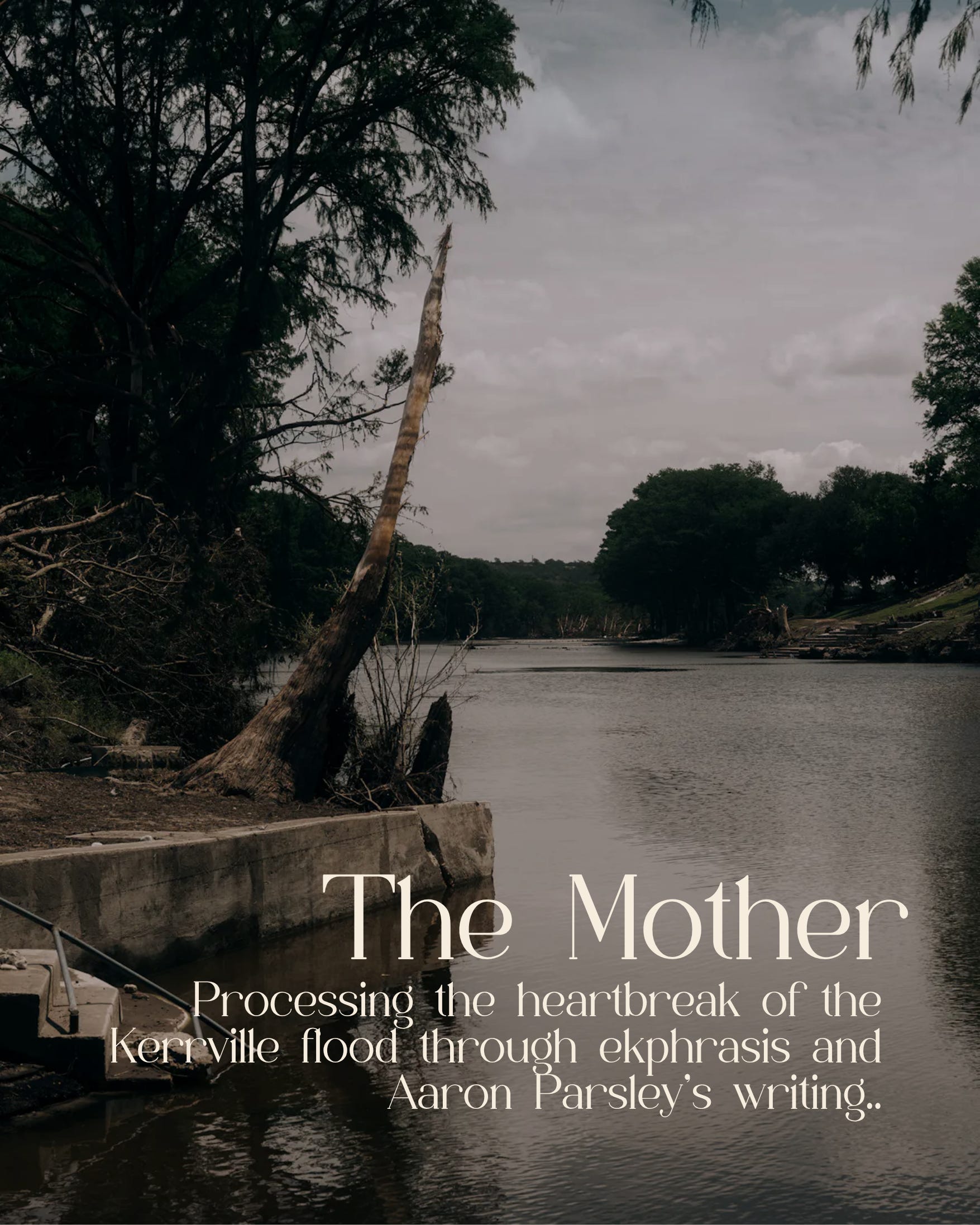
The Mother
"I talked about Aaron Parsley’s piece and how I could not get past the image of a mother, his sister, holding onto a tree with one child in one arm and the other in the other arm."

When I was working on my MFA, we had the opportunity to work with the undergraduate art students in an ekphrastic project. An ekphrastic work is basically one kind of artistic work responding to another kind of artistic work. The visual art students chose poems the grad students had written and created work inspired by our poems. I’d never heard of that term before, but that term I’d taken an old poem of mine that was in free verse and I revised it into a pantoum. My first stab at that form (a very strict form of repeating lines). It worked perfectly for my poem “Mothership” which was, without me realizing, an ekphrastic poem as I’d written it in response to a Turner painting I sat in front of for a long time at The Tate Britain Museum in London when I was pregnant years ago. Since then, I realize much of my work has ekphrastic elements.
Last year, I was home in Nashville when news of the flooding in and around Kerrville, Texas came across my social media feed. In 2006, I was a New Folk Finalist at The Kerrville Folk Festival. That contest is a legendary one in the songwriting community. It is a home to me. And to many of my friends. I wrote about Kerrville in last week’s blog.
Welcome Home

In 2006, I was a finalist in a very famous songwriter’s contest at The Kerrville Folk Festival. If you know anything about folk music or legendary Texas songwriters like Guy Clark, Lyle Lovett, Nanci Griffith, you know about this festival. It’s been going on for a bazillion years. And Guy and Lyle famously won that contest (they pick 6 winners out of 32…
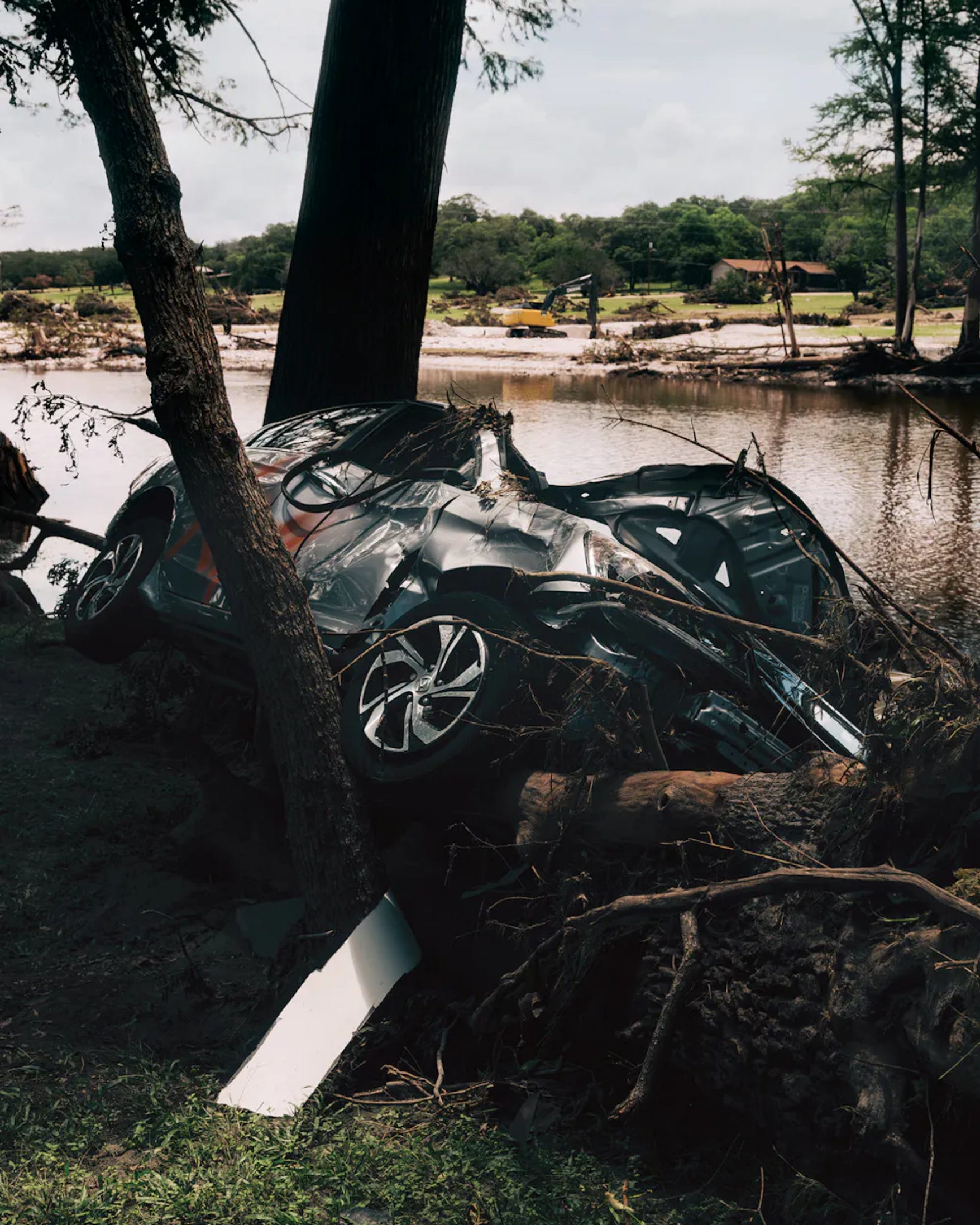
So, when the news of the flood came, and I read the stories and followed the pictures of the devastation, it was unfathomable. I called my friends who lived there to check in. That water so brown and angry and so so so high… impossible. For many years, I’d floated on my back in that beautiful green stillness with the cypress trees that hung over.
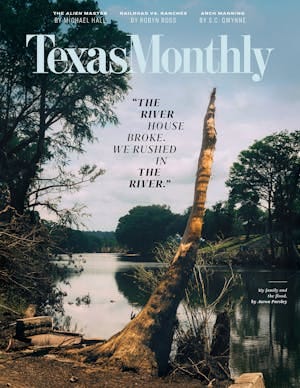
I came across Aaron Parsley’s extraordinary piece in Texas Monthly, his account of his survival and loss written just days after the flood. If you haven’t read it, stop reading me and go read it. He was just awarded the Pulitzer Prize for it. I’ve never read anything like it.
A few weeks later, I was scheduled to spend a week in Wimberley, TX at a songwriter’s retreat at Blue Rock Studio. It was an incredible opportunity to have food and lodging and access to the beautiful space to do nothing all day but write songs. I was invited there by Billy and Dodee Crockett, incredible humans and supporters of the arts (Billy is also a wonderful songwriter and producer himself), and it was me, Billy, and two other songwriters there for the week they’ve dubbed “Occupy Blue Rock.” The other two just coincidentally happened to be my close friends, Jonathan Byrd and Katie Boeck, both extraordinary songwriters and top notch hangs. I had been looking forward to this from the time I got the invite months before.
But I arrived stuck and shocked. Wimberley is in Hill Country, not too far from Kerrville. And Parsley’s article and story was all I could think of. I had that kind of deep grief that mourned a place, a land, a river, but also mourned a loss that wasn’t my own. So, I felt very conflicted about my grief. Or, rather, my right to grieving.
I spoke about it to my friends and colleagues there that first night. I said I thought I had to write about the flood before I could write about anything else and that I had a story that inspired me. I didn’t say much about it as I was only really talking about a feeling I couldn’t quite name yet. “Sympathetic grief” isn’t really a thing and felt shallow. That first full day of writing, I re-read the article for a way in but couldn’t find words. I felt colors. Blue and grey shades. I saw the rain. Really, I heard it. I saw the dark. I wanted to sob, but it wasn’t my loss. I kept trying to find my way into the song, but I couldn’t. I kept firing my own authorship, my right to authorship. As if I didn’t have the right to write anything about this. Does that make sense?
I remember how it felt in the days after 9/11. I lived in Hoboken, NJ at the time at 11th and Hudson Streets, one block from Elysian Park that overlooked the Hudson River. I could see the City from my window (I had been living in Manhattan, then Brooklyn, then Hoboken since 1991). That morning, I’d lied and called in sick to my temp job (which was downtown). There was a Monday Night Football game that had gone into double overtime and we had watched it. Ok, that’s an excuse. I was in a place in my life in between – not happy in anything, I was acting and it was a slog, I had just started playing music out at clubs, I was temping, and I wasn’t unsettled in my marriage. I tended to blow things off and call in sick to the only job that was making me any money for rent. That Tuesday morning, I woke (I’m pretty sure my husband and I got into a fight about me bailing on work again) and walked my two dogs to the park when someone came running up to me to ask where my Kal was and where did he work (they knew he worked in finance) and told me that a plane had hit one of the towers. I ran home, turned the TV on, watched the 2nd plane hit, grabbed a camera (I don’t even know why I thought of that) and ran to the river, just a block away. And spent the next few hours sitting on the banks of the Hudson watching everything. The smoke. The fire. Then the crumbling, so sudden. The sirens, the smoke, the smoke, the smoke.
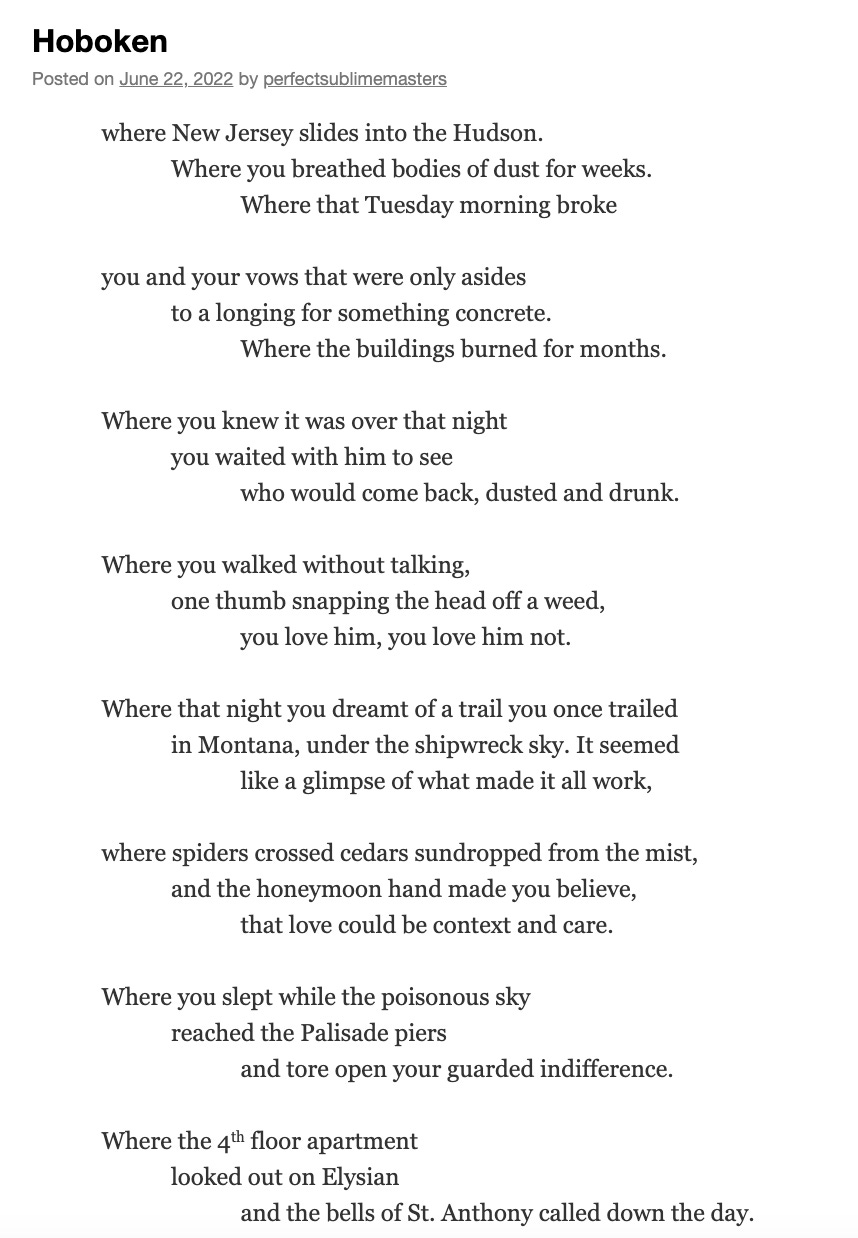
The grief I felt after 9/11 was similar to this one I couldn’t name after the 2025 Texas Flood. Of course, in 2001, was sitting right there on the Hudson River, I knew those Towers, had worked on those floors. Knew the guy who I bought a bagel and a coffee from in the subway hallways underneath. A week before, my friends and I had ridden the elevators to the Windows on the World restaurant and pressed our faces against the windows so high up there. I had friends who escaped the towers, my sister-in-law still won’t talk about that day, and I know she dodged the falling. I know people who died in the towers, my college classmate Fred Rimmele was in one of the planes. So, although I didn’t lose anyone close or that I really knew well, I didn’t just read about the Towers falling. I saw it happen. And but for a sudden urge to play hooky, I would have been there. Still, my deep grief felt, well, borrowed. I didn’t feel like I should be allowed to feel loss, when there were so many who really lost people. [I wrote a poem about this that was published in Euonia Review]
It was the same with Texas. I was gut punched and felt guilty that I was taking on grief that wasn’t my own. That first day, I wrote a mostly instrumental foggy piano piece with very vague lyrics and presented it to Jonathan, Katie and Billy that night when we were sharing what we’d worked on that day. They all know me and know my work, and someone asked me what my ‘in’ was to the song. I talked about Aaron Parsley’s piece and how I could not get past the image of a mother, his sister, holding onto a tree with one child in one arm and the other in the other arm. And that moment the baby slipped out of her arms into the darkness, into water. Even writing that sentence right now, I had to take a breath before writing this one.
Billy, Jonathan and Katie agreed I was holding the story at arm’s length, holding myself at arm’s length. The song wasn’t making any sense because I’d distanced myself too much. I talked to them about feeling like I had no right to write anything about this story. And as I talked, I started crying, and I wasn’t a writer anymore, I was a mother not imagining the moment, but almost like method acting (which I’d studied), I was living that moment in my skin, in my body, wherever my writer-self resides. And it was horrible and impossible and unimaginable, and my dear friends told me I had to write that song with that narrative. They gave me permission.
I stayed up very late that night and did what I usually do when I know I am trying to tackle something too large to put into words. I just write what I see. I went back in my mind to my bedroom that night after the flood, when I scrolled the photos of the flood. The night I found Aaron Parsley’s piece, when Huck, my son, was curled up next to me in bed. And I wrote what I saw. And that song became “The Mother.”
It is on my latest record, that was recorded that week at Blue Rock. I rarely play it in my shows. It’s too much for me. But a few weeks ago, I played The Kerrville Folk Festival, and it was appropriate for that set, for those that experienced the flood. I changed the last line of the chorus which used to be (and is on the recording) “Is there a God who decides who survives?” to “What kind of God decides who survives.” It is angrier. Less writer. More honest.
If my song made any money (and we all know folk songs aren’t cash cows), I’d send all that money to Aaron Parsley’s sister in honor of her lost son. She can have every fraction of a penny Spotify will pay me. I’m sure I’ll never meet her, which is why I wanted to write it, to let her know every mother who read Aaron’s piece was with her.
I played the song last night at a house concert in Fort Worth, Texas. A local politician running for congress, Heli Rodriguez Prilman, a young fiery badass of a woman who is trying to take the seat out from under some old Republican man, came to the show to introduce herself and let the crowd know what she’s about and ask people to vote and get involved. I love this. She took time to come to a concert in someone’s living room to meet her community where they gathered. She stayed for the whole concert, and we talked a lot at the end. I watched her during the show as I sang “The Mother.” She was holding herself back from sobbing. Many were. Which is why I don’t play the song. But we connected as mothers and as fans of Aaron Parsely’s writing (and podcast now).
Ekphrasis is a powerful tool of connection and communication across eras, across mediums. It opened me up to write the song from the perspective of a mother experiencing the flood through Aaron’s story about his experience. Maybe it’s my little way of connecting to his sister. A prayer. This is the only way I can write “topic” songs. I did this with “Ginger Ale and Lorna Doones,” a song about an abortion (Mary Gauthier, when I asked her how to tackle this subject, said, ‘well what did you see?’ and I wrote that). It is how I wrote “The Reckoning,” my song responding to the Renee Good killing (that will release in August).
I don’t expect that Aaron Parsley will ever hear my song. But should anyone out there meet him or know him, please let him know that a folk singer in Nashville who loves the earth in Texas and loves the rivers in Hill Country is grateful for the bravery and heart he brought to writing his piece. And thought about Clay, his nephew, in every moment writing this song. We say ‘thoughts and prayers’ after all tragedies and we all know how that falls. Flat and inept. Maybe St. Augustine was right, albeit misquoted most likely. “To sing is to pray twice.”
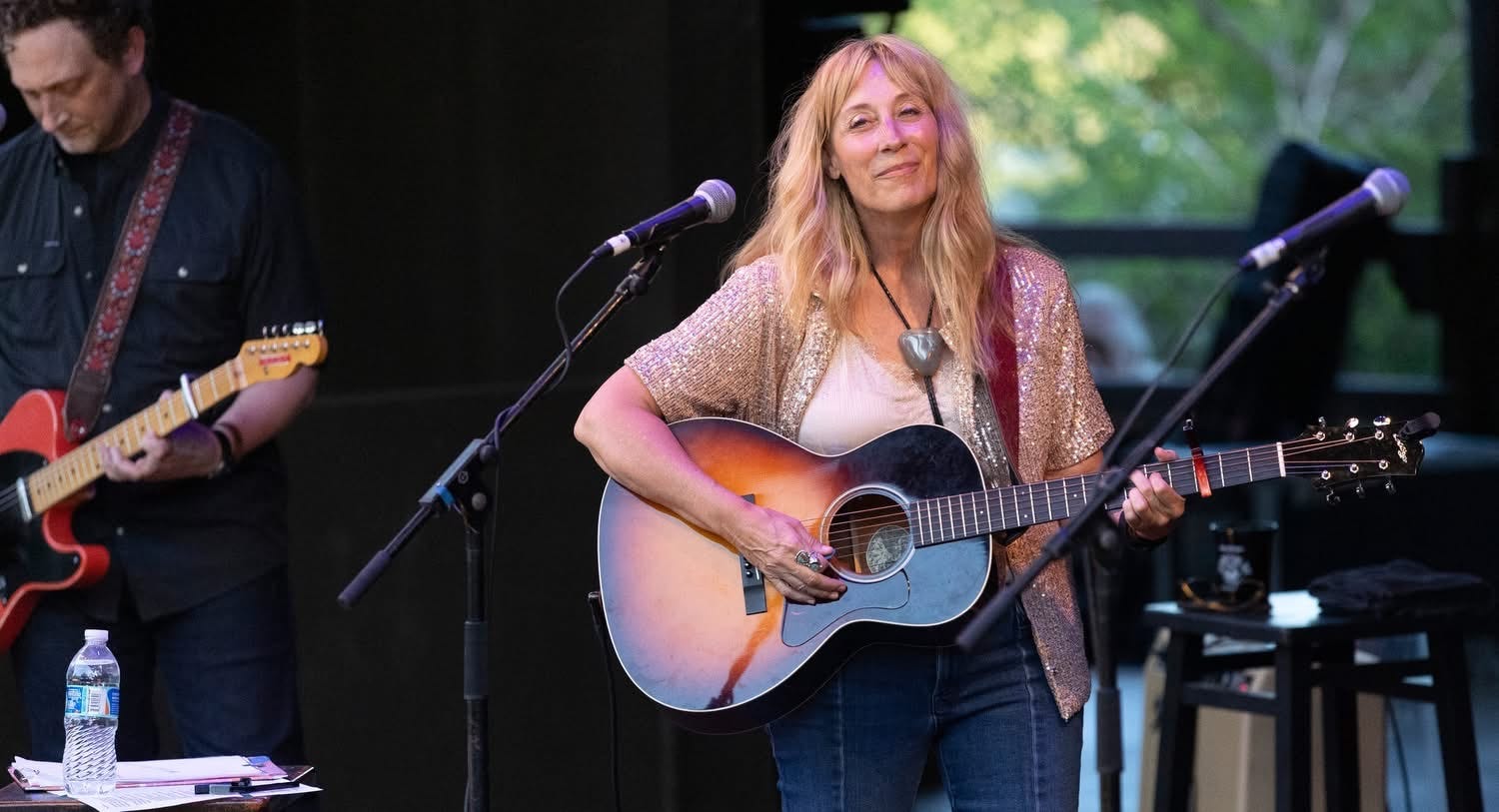
Amy Speace is an award-winning Americana folk singer and songwriter discovered by Judy Collins. Her songs have been recorded by Ms. Collins and many others and she has won International Song of the Year from the Americana Music Association (UK). Her writing has been published in The New York Times, The Guardian, Working Mother, and Salon.com. She received her MFA from Spalding University and teaches English at Cumberland University. She resides in Nashville, Tennessee, with her son, Huckleberry, and her dog, Dusty Springfield. The Cardinals, coming Sept 1st with Red Hen Press , is her debut poetry collection.
Powerful and beautiful. Thanks for sharing