

Magic
"I am a folk singer, but I have never been a good political folk singer nor do I want to be. If I’m honest, I really don’t like political folk songs. I don’t like being told what to do or how to feel.

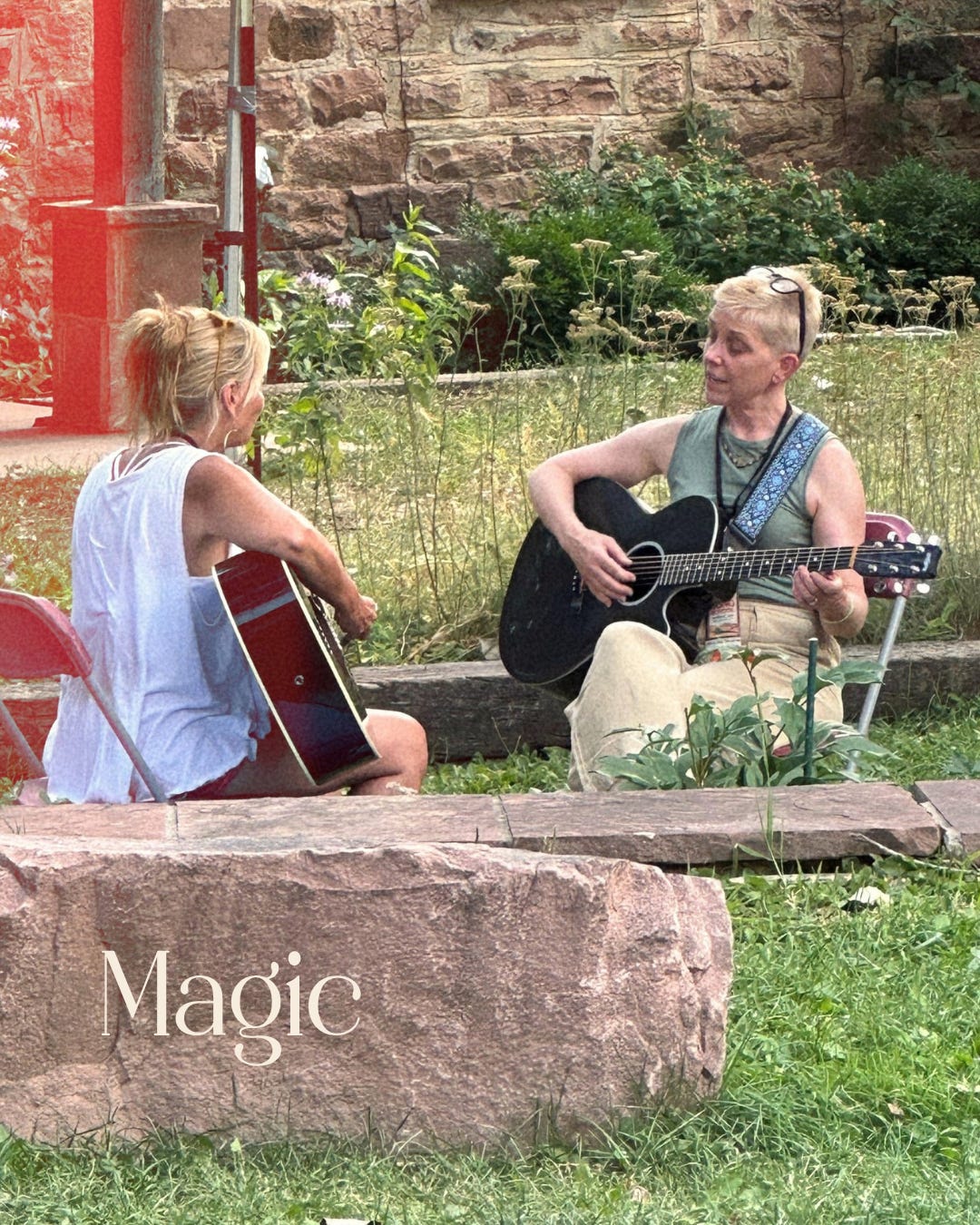
I’m high up in the mountains in Colorado this week, teaching songwriting and performance at Rocky Mountain Folks Festival Song School. This is my 23rd year being here. Maybe more. It’s hard to keep track. I started here two decades ago as a student, a handful of songs, hungry to learn as much as I could about songwriting and to meet other songwriters. I met some of my now oldest friends here that year: Vance Gilbert, Justin Roth, Steve Seskin.
I started teaching performance one year because Julie Portman, the original performance teacher here, had gotten sick and couldn’t make it. I was camping with my songwriting tribe along the St. Vrain River, and the director of the school came back the night before school was starting to ask me if I could put together a four-day comprehensive performance class asap. I said yes automatically, having no idea what to do. He knew I’d studied acting professionally and that I had taken Julie’s classes and that Julie and I had become friends and shared many of the same professional trainings (she was a dancer, actress, choreographer, playwright in the NYC dance theater scene years before). I stayed up all night putting the class together, cobbling what I knew she had taught, but also coming up on the fly with an amalgam of what I had learned myself from my own theater training.
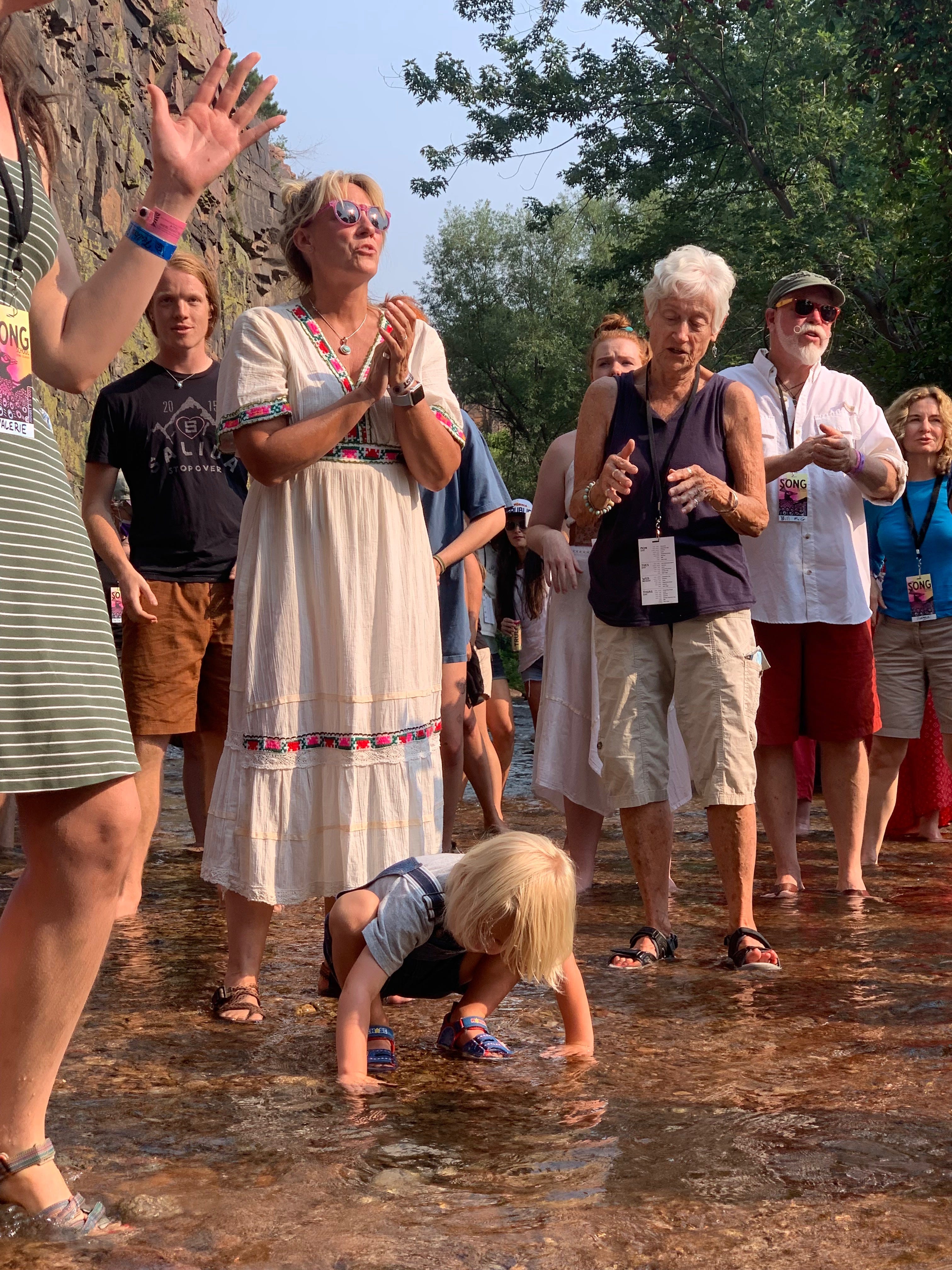
I must not have screwed it up too badly, because the next year I was hired and have been coming back every year. I ended up creating a method of teaching performance that seems to work every time with performers, that can seem quite astounding to watch but really is a simple way of redirecting focus. A few years ago, I wrote a book To The Performer: The Singer-Songwriter’s Handbook that follows what I teach and my own journey. Over the years, my own mentors have become peers and friends, and I feel lucky to be able to return to this place which has become home to me.
One of the things I teach is to create an honesty in writing, which doesn’t mean factually honest. When I write a song, I am always checking in with myself: is this true? I may start from a real story, something autobiographical, but I embellish, retell – craft – the narrative. But there’s always a truth in the emotion or the yearning at the heart of the song.
My new single “The Reckoning” comes out on all digital platforms this coming Friday, August 7th. The video was debuted last Friday by The Bluegrass Situation. It is a truth.
On January 10th this year, I was sitting at home in my living room with Huck. We were watching a movie, or maybe Bluey. It was freezing cold. There would be a massive ice storm that month that took down many trees and left Nashville without power in some places for 8 days. It was cold. I was chewing on thoughts of the recent killing of Renee Goode by ICE agents. Let’s call it was it was. A killing. It was shocking. She was a mother. A poet. A citizen doing a peaceful protest. And was shot and killed. So many shocking and appalling things had been happening, continue to happen, in our country by our government but that was an event that shattered any notion that maybe things wouldn’t be so bad. No. After Renee Goode was killed, things got worse. They continue to be shocking.
I am a folk singer, but I have never been a good political folk singer nor do I want to be. If I’m honest, I really don’t like political folk songs. I don’t like being told what to do or how to feel in a song. It bores me. Even I am on the side of the song and what it is saying. I appreciate my peers for what they are doing with their work, writing those songs, and I’m glad that someone is doing it, but it’s not going to be me. I like protest songs like “Blowin’ In The Wind” and “Chimes of Freedom,” “Mercy Now” and “It’s A Hard Life Wherever You Go.” They tell stories, they pose questions, they don’t answer them.
That night, January 10th, I felt like, as a songwriter and a poet, I needed to get to the page to write something, although I didn’t have any idea what to write. I was numb and shocked and felt a bit hopeless for the country and scared. I just wanted to hold Huck and rock him to sleep. I put him to bed, scratched his back and sang him “Moon River,” as I do every night. Then went to my desk, picked up the guitar and my yellow legal pad and my pen and wrote:
“It’s the 10th of January, the night air dropped to freezing
We took down the tree, I kept it up through the Epiphany
My son is watching dinosaurs and I’m staring at this blank screen
Feeling numb”
I wrote what was happening. I wrote exactly what I was feeling. I wrote the truth
“It took so long to build the porch because the crew had gone to hiding”
That was true. My contractor whose team built my front porch the previous spring called a few times to say that they weren’t able to work that day because ICE was doing a sweep. I wrote about my son asking about his friends from school whose families were originally from Mexico. And mostly, I wrote how I felt completely inept. I remembered Maggie Smith’s poem “Good Bones:”
…Life is short and the world
is at least half terrible, and for every kind
stranger there is one who would break you,
thought I keep this from my children. I am trying
to sell them the world.
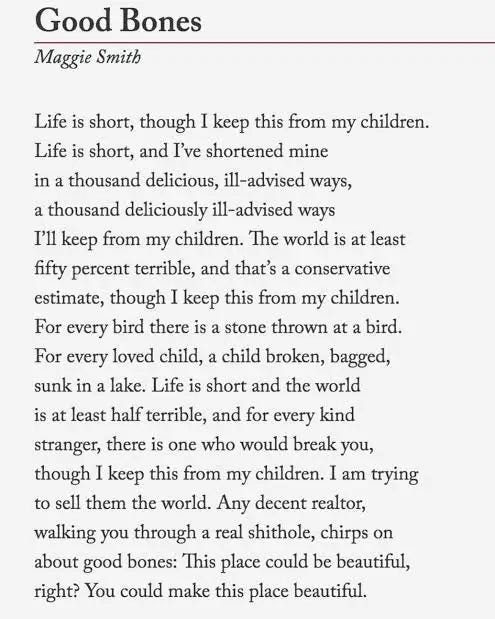
My bridge is a nod to Maggie’s poem.
I do not have the skill to write a song to sing to thousands at a No Kings Rally, a song to motivate anyone to action. But what I know I can do is write something that can connect, that may move someone inside, may make them feel less alone.
Can a song change anything? I don’t know. Is it worth trying. Yes. The half hour it took to ‘download’ that song was well worth my time, even if nobody heard it.
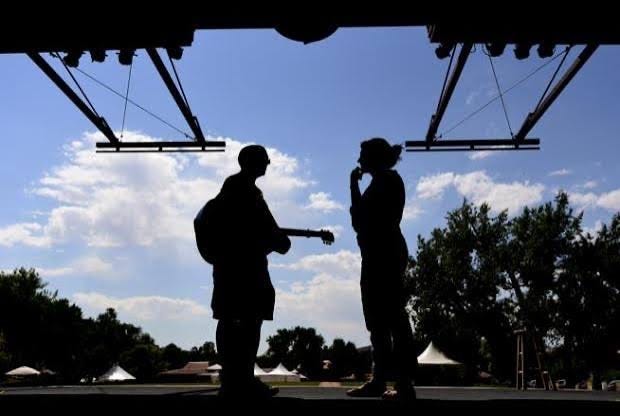
Tonight, I played it under a tent under the stars of a Colorado sky, just as I played my songs for strangers 23 years ago, hoping to find my way into a tribe I wanted to belong to. I don’t play in these circles to impress or to belong anymore. My songs aren’t hit radio songs. But maybe “The Reckoning” will find its audience. Move someone. Make one listener feel less alone in their grieving and numbness. I think that’s why I write songs. To try to put into words the universal with very specific details. My porch workers. Huck watching dinosaurs.
As Maggie’s poem ends:
“This place could be beautiful,
right? You could make this place beautiful.”
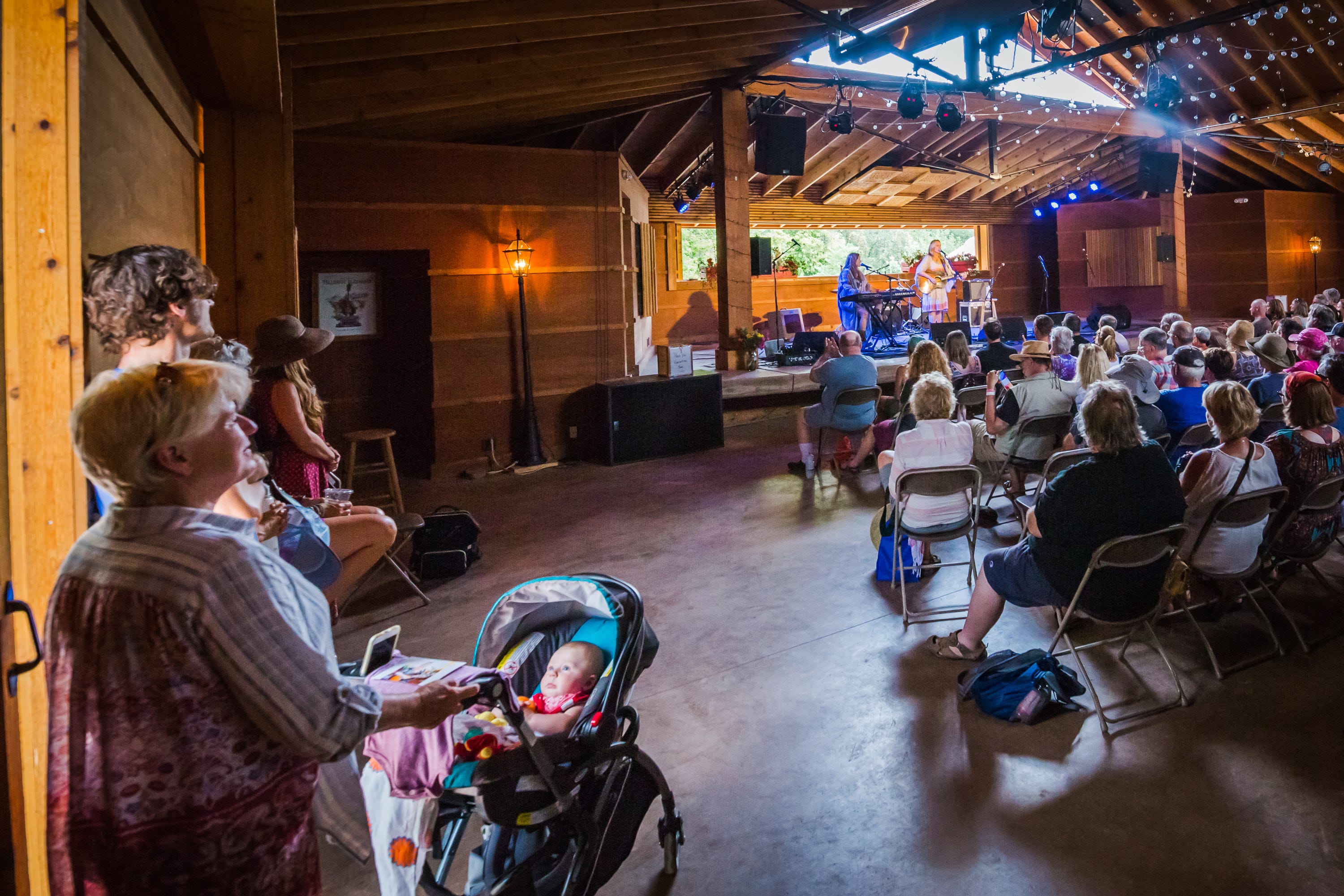
I am back here at Song School this year to try to do my part in this endeavor. To make things a bit more beautiful by maybe helping guide someone in performing their song to a more connected place. Maybe even to help them experience their own greatness. There’s craft and there’s honesty and put them together and that creates a kind of magic. This is my yearly pilgrimage to a magic place. May it be ever so.
Link the video “The Reckoning”
Link to my book To The Performer: https://www.amyspeace.com/store
Amy Speace is an award-winning Americana folk singer and songwriter discovered by Judy Collins. Her songs have been recorded by Ms. Collins and many others and she has won International Song of the Year from the Americana Music Association (UK). Her writing has been published in The New York Times, The Guardian, Working Mother, and Salon.com. She received her MFA from Spalding University and teaches English at Cumberland University. She resides in Nashville, Tennessee, with her son, Huckleberry, and her dog, Dusty Springfield.
The Cardinals, coming Sept 1st with Red Hen Press , is her debut poetry collection.
Most songs with a message are going to be political songs. Some of these songs are covered by others which spreads the message. The great songs become anthems for movements consistent with the message. Anthems bring like minded people together when they sing those songs. They can help support collective action like a protest or simply inform an audience about significant events. In my opinion, protest songs in the 1960's generated public pressure to end the war and generally to move public policy in a liberal direction (e.g., women's rights, inclusion, diversity, accesss to health care and education.) Others obviously disagree but I consider this liberal -- aka progressive -- trend a positive thing. I think music and song were important to that movement.
I think most would agree that this progressive trend has undergone a complete reversal. The 1960's were 60 years ago. I am old. The times are different. I hope music and song can again have the same impact it did back then.
Amy, I like and support your music, songs, and performances. Keep it up!
What a great song, Amy. It does what you set out to do - express feelings rather than preach.
I'll be playing it on my show next week. Dave Bartley